Trimming and pruning are not the same job. Trimming is about size and shape — cutting back overgrowth so a tree fits its space, clears a roofline, or lets light through. Pruning is about health and structure — removing dead, diseased, or badly formed branches so the tree stays sound. Many Evansville trees need a little of both, but the goal decides the cuts.
Trimming is the maintenance cut you schedule when a tree has simply outgrown its spot. Branches reach over the roof, brush the siding, shade the whole garden, or hang low over the driveway and sidewalk. The work focuses on the outer canopy: shortening long limbs, thinning light growth, and restoring a balanced outline.
A good trim keeps the tree’s natural form. It should still look like its species afterward, not like a shaped shrub. If you are comparing services, our guide to professional tree trimming in Evansville explains what a standard trimming visit includes.
Pruning is a selective, deliberate cut made for a reason you can name. Each branch removed is dead, dying, diseased, crossing and rubbing, weakly attached, or growing in a way that will cause trouble later. Young trees are also pruned to build a strong structure — one central leader and well-spaced scaffold branches — so they do not develop defects that become expensive or dangerous at mature size.
Pruning cuts follow the tree’s biology. A proper cut is made just outside the branch collar, the swollen ring where branch meets trunk, so the tree can seal the wound with new wood. Cutting flush against the trunk removes that collar and leaves a wound that closes slowly; leaving a long stub invites decay. You can read more about how proper tree pruning in Evansville is done on our service page.
Not sure which list your tree belongs on? The checklist of 9 signs your tree needs pruning walks through the health-side warning signs one by one.
| Question | Trimming | Pruning | |—|—|—| | Main goal | Size, shape, clearance | Health, structure, safety | | What gets cut | Outer, overgrown, or misplaced growth | Dead, diseased, crossing, weak, or hazardous branches | | Typical timing | As growth requires, often every few years | When defects appear; structural work while young | | Tools | Pole saws, loppers, climbing saws for outer canopy | Handsaws and climbing work for precise interior cuts | | Risk if done badly | Ugly regrowth, lion-tailing, stressed canopy | Decay from bad cuts, spread of disease on dirty tools | | Who it suits | Fast growers shading the house or yard | Any tree with deadwood, defects, or disease signs |
In practice, one visit often combines both: the crew prunes out the deadwood and problem branches first, then trims the outline back into balance. The estimate should still describe the two kinds of work separately, so you know what you are actually getting.
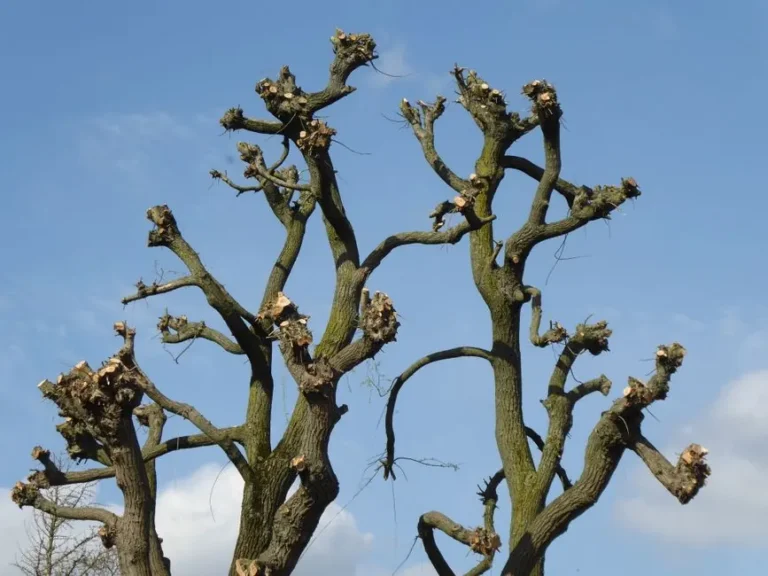
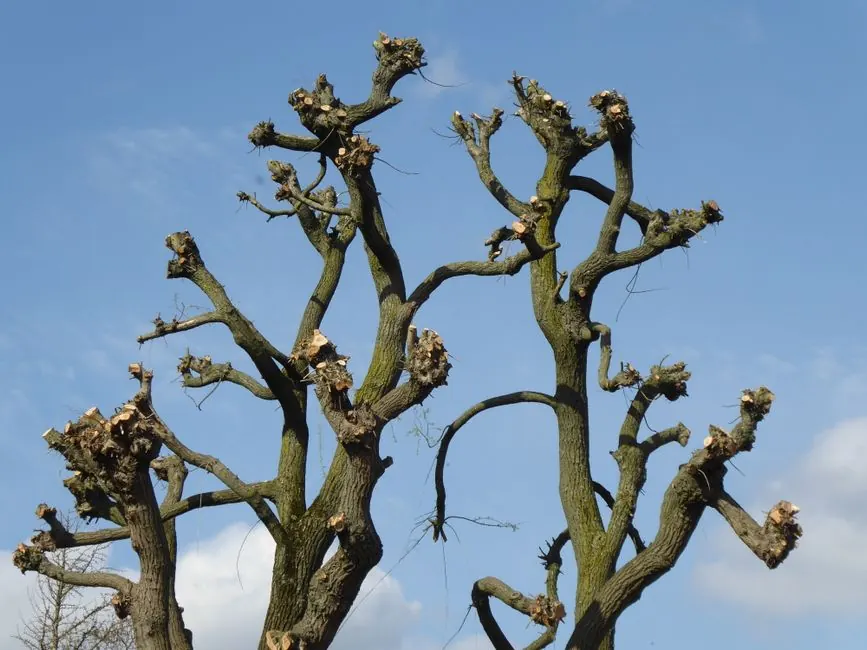
Yes. Heavy trimming that strips the interior and leaves tufts at the branch ends — sometimes called lion-tailing — shifts weight outward, makes limbs more likely to fail, and pushes the tree into weak, rapid regrowth. Topping, cutting main stems back to stubs, is worse still and is neither trimming nor pruning.
Pruning done badly also harms. Flush cuts, stub cuts, and climbing spikes on a tree that is not being removed all wound living tissue unnecessarily. Tools should be cleaned between trees when disease is present, because a saw can carry fungal problems from one canopy to the next. If a problem is severe enough that correct cuts cannot save the tree, tree removal in Evansville becomes the honest recommendation instead of repeated cutting.
Yes, and combining them is common. The crew typically handles the health work first, removing dead, diseased, and crossing branches, then trims the outer canopy for clearance and shape. Combining visits reduces climbing time and means the tree is only opened up once. Ask for the two kinds of work to be listed separately on your estimate so the scope is clear before anyone starts cutting.
Not necessarily, because the two jobs involve different amounts of climbing and decision-making. Light trimming on a small ornamental tree is quick work, while careful pruning high in a mature oak takes longer. Size, access, and how much wood must come down and be hauled away matter more than the label. A clear written estimate describing the exact branches and goals is the reliable way to compare.
Often, yes, at least for a while. Cutting branch tips encourages the tree to push new growth from buds just behind the cuts, which can make the canopy denser the following season. That is one reason heavy shaping cuts disappoint homeowners within a couple of years. Correct technique, cutting back to suitable laterals instead of shearing the outline, produces slower, weaker regrowth and keeps the tree looking natural for longer.
Start with the dead branches, because they are a falling hazard and a sign of the tree’s condition. A pruning visit removes the deadwood, checks for disease or structural problems, and only then shapes the remaining healthy canopy with trimming cuts. If inspection shows the decline is widespread rather than limited to a few limbs, you will get a straighter recommendation about whether the tree can recover or should come down.
You do not have to diagnose it yourself. Call (844) 542-2293 and describe what you are seeing — overgrowth, deadwood, or both — and we will arrange an assessment and a clear estimate for the work your tree in Evansville actually needs, trimming, pruning, or a sensible combination of the two.