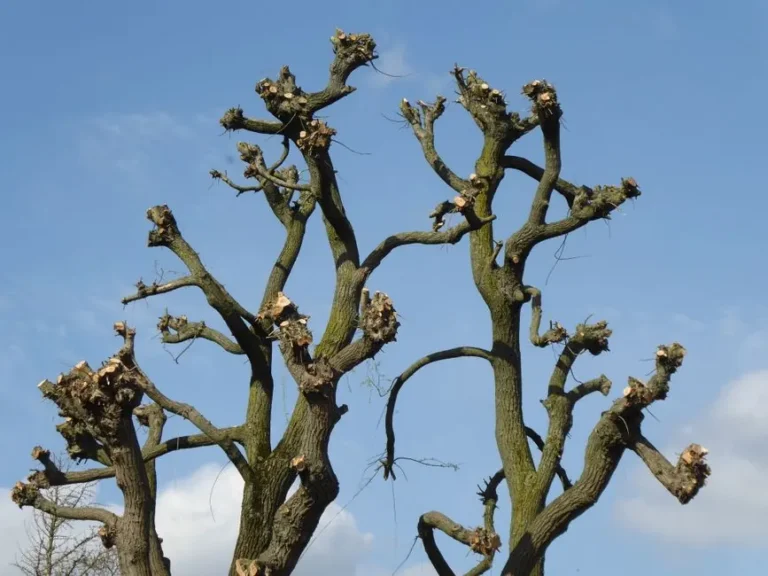
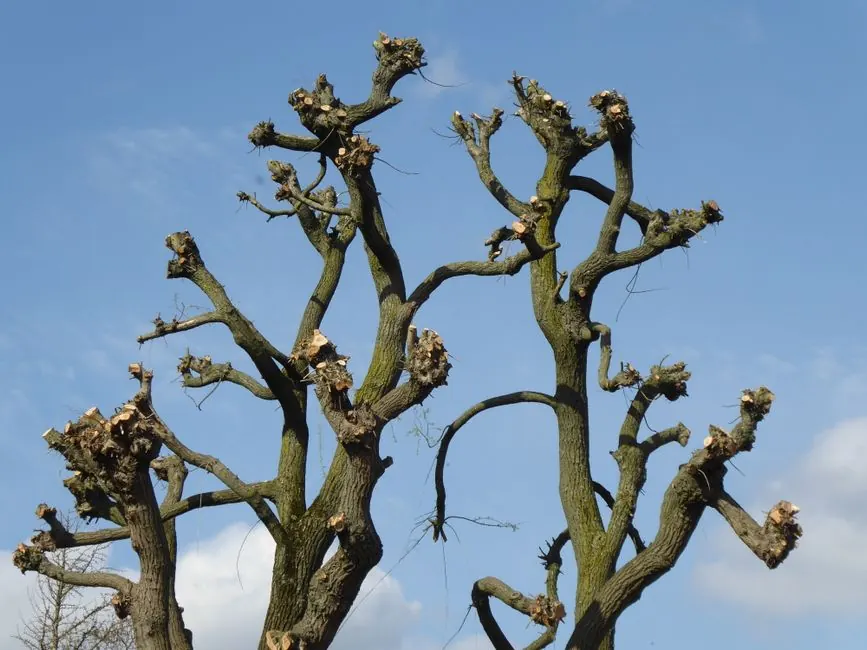
For most shade trees in Indiana, the best time to prune is late winter — roughly from the end of January through early March, while the tree is fully dormant and before buds swell. Wounds close quickly once spring growth starts, decay organisms and insects are inactive, and without leaves you can see the branch structure clearly. Some trees break that rule, and those exceptions matter.
Dormancy changes everything about pruning. Sap flow is minimal, so cuts on dormant trees lose little energy. The fungi and bacteria that can enter fresh wounds are mostly inactive in cold weather, and the insects that carry diseases like oak wilt are not flying. Most importantly, as soon as spring arrives, the tree directs a full season of growth into sealing the pruning wounds.
Visibility is the practical bonus. On a bare maple or oak in February, crossing branches, weak forks, and deadwood are easy to spot, and the crew can plan precise cuts instead of hunting through foliage. The general approach is covered on our tree pruning service page for Evansville, but timing is a decision every homeowner controls.
Oak wilt is a serious fungal disease in Indiana, and its spores are spread by beetles that are attracted to fresh pruning wounds. Those beetles are most active from about April through the middle of summer. Pruning oaks during that window is an open invitation. If an oak needs work, schedule it in deep dormancy — the colder months. Our species guide on pruning oak and maple trees in Evansville covers oak timing in more detail, including what to do if an oak is genuinely dangerous in July (remove the hazard, seal nothing, and monitor — safety comes first).
Lilac, magnolia, redbud, dogwood, and crabapple set next year’s flower buds on this year’s growth, soon after blooming finishes. Prune them in late winter and you remove the buds and lose the spring show. Prune them within a few weeks after flowering ends and you keep both the blossoms and the shape.
Apples and other fruit trees are traditionally pruned in late winter too, because dormant pruning invigorates them and makes it easy to build an open, productive framework. Fast-growing shade trees like silver maple tolerate dormant pruning well and often need it more regularly, because their rapid growth creates weak, crowded branching.
Removing a dead, broken, or hazardous branch should not wait for a calendar window — a dangerous limb comes out in July as readily as in January. Summer is also acceptable for light corrective work: a rubbing branch, a limb touching the roof, or growth blocking a sign or sightline. Growth also slows after the spring flush, so light summer trimming regrows less aggressively.
What summer is not good for is heavy pruning. A tree in full leaf is feeding itself; removing a large share of its canopy in July cuts its energy income at the hottest, driest point of the year in the Ohio River Valley.
Early fall is the least favored window for routine pruning in Indiana. Decay fungi release spores heavily in autumn, wounds seal slowly heading into winter, and pruning can occasionally stimulate tender growth that an early hard frost can kill. A dead or dangerous branch still comes out in October — safety overrides season — but a full structural pruning is better booked for late winter.
| Tree / job | Best window | Avoid | |—|—|—| | Most shade trees (maple, ash replacements, elm, hackberry) | Late January to early March | Heavy pruning in peak summer heat | | Oaks | November to early March | April through mid-summer (oak wilt risk) | | Spring bloomers (lilac, magnolia, redbud, dogwood) | Right after flowering ends | Late winter, if blooms matter to you | | Fruit trees | Late winter, fully dormant | Wet weather, which spreads disease | | Dead or hazardous branches | Immediately, any season | Waiting for a “better” month | | Young tree structural pruning | Late winter, years 2-5 after planting | Letting defects grow large first |
If you want the whole year organized in one place, our tree care calendar for Indiana homeowners sets pruning alongside planting, mulching, and storm-season preparation.
A little. Dry days are better than wet ones, because rain and high humidity help fungal spores move, and wet wood is harder to cut cleanly. Extremely cold snaps are workable for crews but very frozen wood can splinter, so the coldest single-digit days are often rescheduled. None of this changes the seasonal plan — it just fine-tunes the exact week your job gets booked.
Yes, mid-winter is an excellent time for most species. The tree is fully dormant, disease-carrying insects are inactive, and the structure is completely visible without leaves. Crews work through Indiana winters regularly, and your lawn benefits too, because frozen or dormant ground shows less damage from equipment and foot traffic than soft spring soil. The main exceptions remain oaks in the opposite direction — winter is their safest window, not a risky one.
Pruning an oak in May creates fresh wounds at the exact time the beetles that spread oak wilt are active and searching for sap. An infected tree can decline quickly, and the disease can move through root connections to neighboring oaks. If an oak absolutely must be cut in spring for safety, the work should be limited to the hazard itself and the tree monitored afterward. Routine oak pruning should always wait for cold weather.
If the blossoms matter to you, wait until flowering finishes and prune within a few weeks after it. That preserves this spring’s display and still gives the tree most of the growing season to seal the wounds. If the overgrowth includes dead or hazardous branches, those can be removed right away without touching the healthy flowering wood. Many homeowners split the job: safety cuts now, shaping cuts right after bloom.
Yes. A split trunk, a limb hanging over a roof or driveway, branches tangled in a service line, or a tree that suddenly leans after a storm all justify immediate work in any month. Calendars are for routine maintenance, not for hazards. In those cases the priority is making the site safe, and seasonal fine-tuning is planned afterward once the immediate danger is gone.
If your trees are due, late winter slots in Evansville fill quickly once the season turns. Call (844) 542-2293 to talk through what species you have and what they need, and we will recommend a timing that protects the tree — not just a date that suits the schedule.