
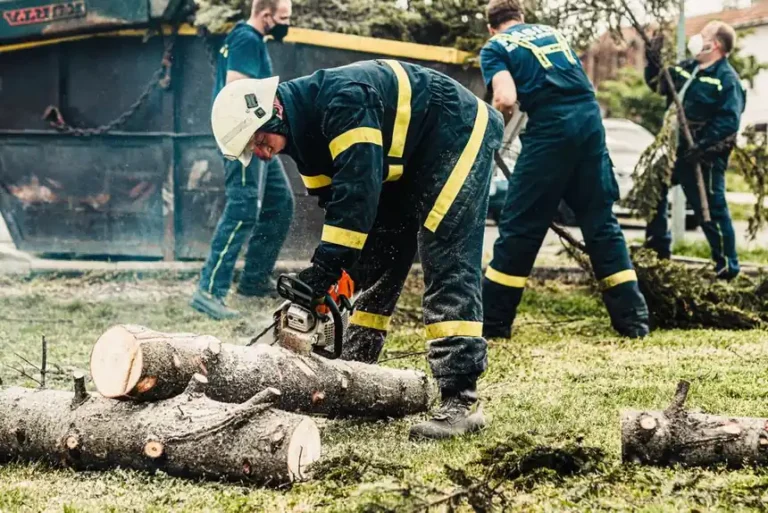

A tree care calendar for Indiana homeowners is built around four turning points: prune most shade trees while they are dormant in late winter, inspect everything as leaves emerge in spring, water and mulch through summer heat, and clear deadwood and weak limbs in fall before ice and wind arrive. Spread the work across those seasons and most tree problems are caught while they are still small, simple, and safe to correct.
Evansville sits in the Ohio River valley, where humid summers, saturated spring soils, and winter ice all stress trees in different ways. The calendar below follows the southern Indiana year, season by season, with the tasks that matter in each window.
Leafless trees show their structure clearly, so winter is when crossing branches, weak unions, and deadwood are easiest to see and correct. Frozen or firm ground also supports equipment with less lawn damage. Most shade trees, including oaks and maples, are best pruned in this dormant window, a point we cover in depth in the best time to prune trees in Indiana.
Walk your property on a calm day and look up. Split bark, hanging branches left from fall storms, and fungal growth at the base are all easier to spot without foliage.
Winter is also the season to check mulch rings. Mulch should form a wide, flat layer a few inches deep, pulled back from the trunk itself. Rake volcano-shaped piles flat while beds are bare; they hold moisture against the trunk and invite decay.
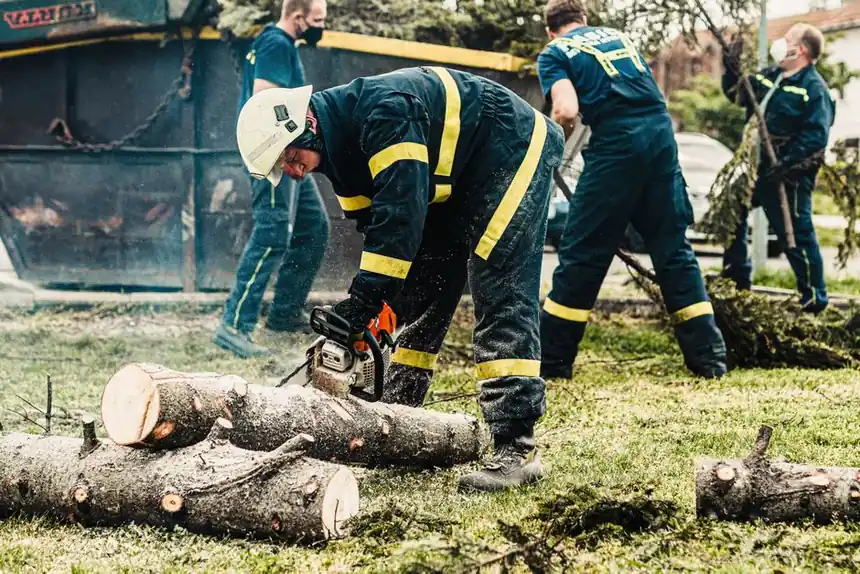
As buds open, watch for branches that stay bare while the rest of the tree leafs out. Dead tips in spring usually mean the problem started months earlier, in roots, trunk, or last season’s damage.
Look for curled or spotted leaves, sawdust-like material on bark, and holes in trunks. Southern Indiana ash trees deserve special attention in spring, when emerald ash borer activity becomes visible; early detection gives you more options.
Spring in the Ohio River valley brings saturated soil and strong wind, the combination that topples trees with weak roots. After any major storm, check for new leans, lifted soil at the base, and cracked unions, even on trees that stayed standing.
Established trees usually manage on rainfall, but extended dry, hot stretches stress even mature shade trees, and young trees suffer quickly. Water slowly and deeply at the root zone rather than sprinkling the lawn.
A proper mulch ring conserves soil moisture, moderates root-zone temperature, and keeps mowers and string trimmers away from the bark. Top up thin rings, keep the layer off the trunk, and extend it toward the drip line as the tree grows.
Heat-stressed trees drop leaves early, scorch at leaf edges, or thin visibly in the crown. Summer thunderstorms also snap weak limbs and expose cavities. After heavy weather, do a slow walk-around before assuming all is well, and keep people away from any branch resting on a line or roof until a professional has assessed it. Routine tree trimming in Evansville during the right windows keeps small summer problems from becoming autumn emergencies.
Fall is the time to remove what winter would weaponize. Dead branches, cracked unions, and limbs overhanging the roof should come out before ice loads them. Ice adds enormous weight to every surface, and branches already weakened are the first to fail under it.
Keep watering young and stressed trees until the ground freezes, especially after a dry fall.
If your spring and summer notes list structural work, fall is when to line it up. Our guide to winter tree care tips for Evansville homeowners picks up where this calendar leaves off, with freeze-specific detail.
Some care is not seasonal at all. Keep equipment and vehicle weight off root zones. Never cut flush against the trunk or leave long stubs when you prune small branches yourself. And whenever a tree changes suddenly, a new lean, a crack, mushrooms at the base, treat the calendar as irrelevant and get it looked at promptly. The shaping and health work described on our tree pruning page follows these same seasonal rules.
Late winter, roughly February into early March, carries the most weight. Trees are fully dormant, structure is visible, ground is firm, and pruning wounds close as spring growth begins. If a homeowner does only one planned thing for mature shade trees each year, a dormant-season inspection and corrective pruning session is the highest-value choice. It sets the tree up before leaves, storms, and summer stress test every weakness in the canopy.
Yes, with limits. Removing dead, damaged, or hazardous branches should not wait for a season; deadwood is deadwood in July too. Light corrective work is fine, but heavy live-wood pruning is better left to dormancy, and some species have disease-timing concerns that make late winter the safer choice. When in doubt, take out what is dangerous now and schedule the structural work for the dormant season.
Check the soil, not the calendar. Push a screwdriver or soil probe a few inches down near the root zone. If the soil is dry at that depth during a hot, rainless stretch, water slowly and deeply so moisture reaches the roots rather than running off the surface. Young trees in their first two summers need this check weekly, because their root systems have not yet spread far enough to find moisture on their own.
Partly. The inspection, watering, mulch, and storm-preparation habits apply to every tree on your property. Pruning timing differs, though. Many evergreens prefer late spring trimming of new growth, and fruit trees follow their own dormant-season shaping rules for production. Use this calendar as the framework for shade trees, and adjust pruning windows by species for the special cases in your yard.
Trees rarely fail without warning. They decline on a schedule, and a simple seasonal routine lets you meet them on it. If your walk-through turns up deadwood, cracks, or a tree you are unsure about, call (844) 542-2293 to arrange an inspection and plan the right work for the right season.