When a tree falls on your house, your only first job is getting people and pets out safely. If the roof or walls are damaged, if you smell gas, or if wires are down, leave the home and call 911 from outside. Do not climb onto the roof, do not try to move limbs under tension, and do not re-enter a sagging structure. Once everyone is safe and emergency help is on the way, you can document the damage and start the cleanup process.
A falling tree can crack rafters, shift walls, and break gas and water lines in ways that are not obvious from the doorway. Treat warning signs seriously: doors that suddenly will not close, new cracks in ceilings, a roofline that visibly dips, or the sound of creaking and settling.
If the tree brushed the house lightly, landed on a fence or outbuilding, or is resting on a strong roof section with no sign of penetration, staying may be reasonable. Even then, keep everyone out of the rooms directly under the impact area until someone qualified has looked at the structure. When in doubt, err on the side of leaving. Belongings can be retrieved later; people cannot be un-hurt.
Look from a distance, never up close. If any line is down, tangled in the tree, or pulled loose from the house, treat it as live. Keep people and pets well back and let the utility company handle it. Our guide to what to do when a tree is on a power line covers this danger in detail, because it is the one that injures homeowners most often after storms.
Once you are outside and safe, the order matters:
Our emergency tree service in Evansville exists for exactly this situation: a tree down on a structure, worked carefully and in the right sequence.
Insurance claims live and die on documentation, and the best evidence disappears the moment cleanup starts. From safe positions outside the home, take wide photos showing the whole tree and roof, then closer shots of each damaged area: shingles, gutters, siding, windows, fences, and anything crushed underneath.
Note the date and time, what the weather was doing, and when you first saw the damage. Photograph inside rooms only if it is safe to enter. Save receipts for anything you spend because of the event, such as a hotel night or emergency supplies. Keep a simple log of who you spoke with and when. General guidance only: every policy differs, and your insurer or agent is the source for what your specific policy covers.
Well-meaning helpers sometimes start cutting before photos exist. Ask them to wait until you have documented the scene, unless something is actively endangering people. A few minutes of photographs protect you far more than a fast start on the saws.
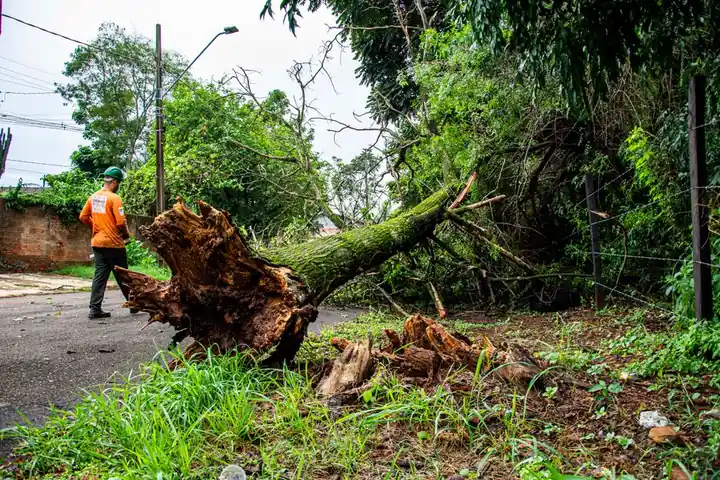
Removing a tree from a roof is not ordinary tree work. The weight shifts as pieces are cut, and a section that looks stable can roll or drop when a supporting limb is removed. Crews work the tree down in controlled pieces, sometimes with rigging or a crane for large stems over the structure, and they coordinate with roofers when temporary cover is needed to keep weather out.
Once the tree is removed, the remaining work usually includes hauling the wood and debris, grinding the stump if the tree came up by the roots or the stump remains, and clearing the work area so roofers and other trades can do their part. Our storm damage cleanup service explains how the yard and debris side of a storm job is handled after the urgent hazard is gone.
No, you should not cut a tree off your roof yourself. A fallen tree rests under unpredictable tension and compression, and cutting the wrong piece can release stored energy that shifts the whole stem. Add a sloped, damaged roof surface and the work becomes some of the most dangerous in the trade. This is a job for a trained crew with rigging equipment, working from safe positions.
Coverage depends on your individual policy, and this article cannot promise what any policy includes. In general terms, many policies treat a tree that damages a covered structure differently from a tree that simply falls in an open yard, and there may be separate limits for debris removal. The reliable step is to call your insurer early, document thoroughly, and follow their guidance for your specific claim.
The tree should come off as soon as it can be done safely, because every day it rests on the structure can add water damage through the broken roof and stress damaged framing. Weather, utility clearance, and crew safety set the real schedule. The priority order is safety first, then preventing further damage, then full cleanup, and a good crew will explain that sequence when they assess the scene.
Stay calm and start with the same steps: safety, documentation, and a call to your own insurance company. Questions of responsibility and cost sharing between neighbors are handled through insurers and the facts of each situation, not at the fence line during a storm cleanup. Photograph where the tree stood and where it landed, and let the insurance process sort out the rest while the hazard is removed.
Call (844) 542-2293 and describe what happened. We will talk you through the next step for your situation, and you can see the rest of our tree services for Evansville when things have calmed down.