A dead tree has no living tissue left: its twigs snap instead of bending, the layer under its bark is brown and dry, and it produces no buds, leaves, or new growth. A dying tree still has living wood and some healthy canopy, but it is declining year after year. Telling the two apart matters, because a dying tree can sometimes be helped, while a dead one only becomes more brittle and more likely to drop limbs.
The tests below take a few minutes, need no special tools, and work on most shade trees in Evansville yards.
Death in a tree is a whole-tree condition, not a bad branch or a bad season. A dead tree fails every check at once. In spring and summer it sets no leaves, or it pushes out a few weak ones that wither quickly and never size up. Its fine twigs are dry all the way through and snap cleanly when bent, like a dry stick picked up off the ground. The bark often loosens, cracks lengthwise, and sloughs off in patches, exposing bare, weathered wood that may already be softening.
A tree in this state is no longer feeding its roots or holding its structure the way a living tree does. What is left is a standing skeleton that decay organisms are steadily hollowing out. Dead trees do not recover next spring, and waiting does not improve them. It only raises the chance that the removal happens after a limb lands somewhere it should not.
A dying tree is still alive, and parts of it may look perfectly respectable. The pattern to recognize is decline over time. The canopy thins a little more each year. Leaves come in smaller or paler than they should. Whole branches die at the tips and the dieback creeps inward toward the trunk. The tree may leaf out late, drop leaves early in the fall, or push out clusters of small, stressed growth along the trunk and main limbs, which is a classic sign the crown is failing and the tree is trying to compensate lower down.
Trees decline for reasons that can sometimes be fixed: drought stress, compacted soil from construction or parked vehicles, roots cut during digging, girdling roots strangling the flare, or disease that has not yet reached the trunk. For a full picture of how these problems present, our overview of the signs a tree needs to be removed puts decline in context with the structural warning signs.
Find a young twig and scratch the bark gently with a thumbnail or a pocketknife, just deep enough to see the layer underneath. On a living tree that layer, the cambium, is green and moist. On a dead twig it is brown, gray, and dry. Test several twigs in different parts of the canopy, high and low, because one side of a tree can die while the rest is still alive.
Living twigs bend before they break and feel slightly springy. Dead twigs snap. In late winter and spring, check the buds at the twig tips: living buds are plump and, when cut, green inside. Dead buds are shriveled, dry, and brown all the way through. If you find live buds in most of the canopy, something in that tree is still working.
Press and look at the bark on the trunk. Firm, well-attached bark is a good sign. Bark that is loose, peeling in long sheets, or missing altogether points the other way. At the base, check the flare where the trunk meets the soil. Mushrooms, soft spots, or a trunk that sounds hollow when rapped with your knuckles suggest decay that a scratch test on twigs cannot see.
Local conditions stack the deck in a few familiar ways. Hot, dry late summers stress trees that then enter winter weakened. The moisture of the Ohio River valley encourages fungal problems in bark and roots, especially in yards where air barely moves. Storm damage that tears bark opens a path for decay. Construction is a quiet killer: grade changes, trenching for utilities, and patios poured over root zones often show up as canopy decline two or three years later, long after the project is forgotten. And some trees are simply old. A silver maple planted when the neighborhood was new has lived its natural span and is retiring, branch by branch.
If disease is your main suspicion — spotted leaves, oozing cankers, dieback that started on one side — start with our guide to the signs your tree is diseased so you know what to describe when you call.
Bare branches in January prove nothing, because every deciduous tree in Indiana looks dead in winter. The fair test comes in spring. Mark a few branches you are unsure about with ribbon in winter, then watch them as the neighborhood leafs out. If those branches stay bare while the rest of the tree greens up, they are dead wood, and the question becomes how much of the tree they represent. One dead limb on a full tree is a pruning job. Half the canopy silent in May, on a tree whose trunk also fails the base check, points to removal of the tree while it can still be dismantled in a controlled way.
Sometimes, when the cause is temporary stress such as one dry summer, a dying tree can stabilize with deep watering, mulch, and time. Decline caused by root damage, trunk decay, or advancing disease rarely reverses without intervention, and often cannot be reversed at all. The earlier the cause is identified, the better the odds, which is why a tree that looks worse each spring deserves an assessment rather than another year of waiting.
There is no dependable timeline, because it depends on the species, the size of the tree, and how quickly decay moves through the wood. Some dead trees stand for a few seasons, while others begin shedding limbs within months. What is certain is that a dead tree gets weaker, never stronger, and becomes harder and riskier to dismantle the longer it stands.
Almost always, a shade tree that produces no leaves at all by late spring is dead or nearly so, because a living tree will at least attempt weak, undersized growth. Check the twigs with the scratch test before concluding anything, since a tree in severe stress can leaf out very late and poorly. If every twig shows brown, dry tissue, the tree is gone.
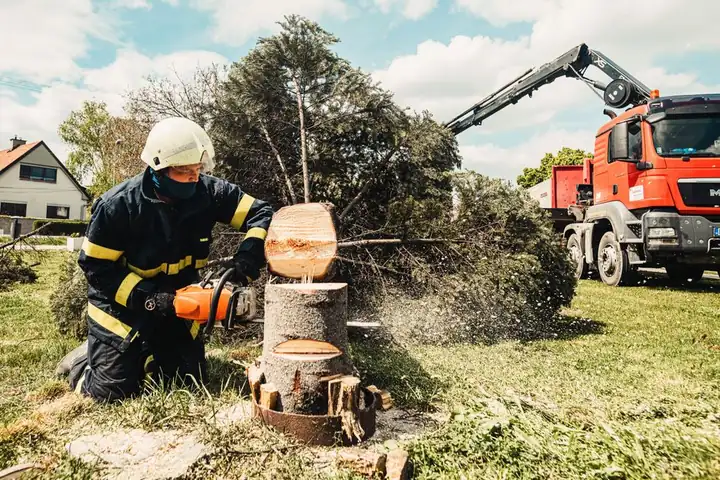
A dead tree far from anything it can hit can be left as habitat in a large, open property, though it will fall in pieces eventually. A dead tree within reach of a house, driveway, sidewalk, or play area should be removed promptly, because its limbs and top can come down without warning in ordinary weather, not only in severe storms.
If your tree fails some tests and passes others, that gray area is exactly what an assessment is for. We will check the canopy, trunk, and base, and tell you honestly whether your tree can recover with care or has already died. Call (844) 542-2293 to request a visit and describe what your tree has been doing over the last few seasons.