Professional tree removal works by taking the tree apart in controlled pieces rather than simply cutting it down. A crew first assesses the tree and everything around it, sets up a protected work zone, then removes branches and trunk sections in order, lowering each piece on ropes when there is anything below worth protecting. The stump is ground or left by agreement, debris is hauled away or stacked as arranged, and the yard is cleaned before the crew leaves.
Knowing the sequence helps you prepare your property, ask sharper questions, and understand what your estimate actually covers.
Every removal starts with a look, not a saw. The crew studies the tree’s species, size, lean, and condition, because dead, hollow, or decayed wood behaves differently from sound wood and may not hold climbing gear or rigging the usual way. They map the drop zones: roofs, fences, sheds, gardens, driveways, utility lines, and the neighbor’s property all shape the plan. Access matters too — where equipment can stand, where cut wood will be staged, and how debris will leave the yard.
This assessment is what turns tree removal from a guess into a plan, and it is why a responsible estimate follows a site visit rather than a photo alone. If the tree touches or leans over a power line, the plan also accounts for the utility’s role, because line clearance is handled differently from ordinary tree work.
Before cutting starts, the crew sets a work zone under and around the tree and asks for it to stay clear of people and pets. Vehicles move out of range. Patio furniture, grills, potted plants, and anything fragile under the canopy get moved or protected. On many jobs the crew lays down mats or plywood where equipment will cross the lawn, which spreads the weight and limits ruts in soft Evansville soil, especially in spring when yards are still holding moisture.
Good preparation looks uneventful, and that is the point. The safety zone is how professionals make sure an unplanned bounce or roll still lands on empty ground.
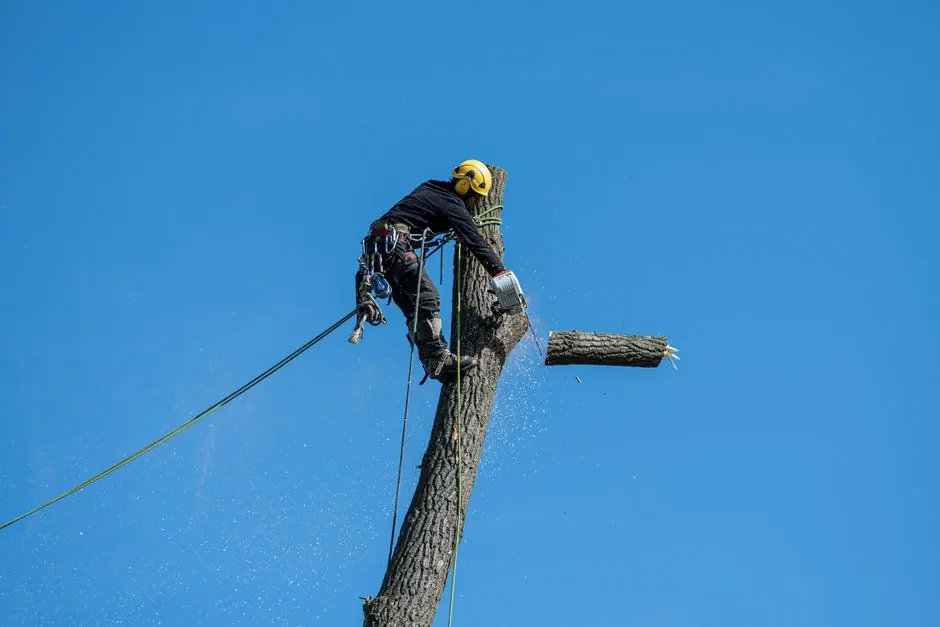
On a tree with room to fall whole, a crew may fell it in one piece after clearing the area, but most Evansville removals happen in fenced yards where that is not an option. Instead, a climber works through the canopy, or the crew works from a lift, cutting branches in sequence. Smaller branches may drop into the zone. Larger limbs are tied off with rigging ropes, cut, and lowered hand over hand or with friction devices so each piece swings where the ground crew guides it, not where gravity alone chooses.
Working from the outside in and the top down keeps the tree balanced as long as possible. The ground crew feeds cleared brush to the chipper as the work proceeds, so the yard never disappears under a mountain of limbs.
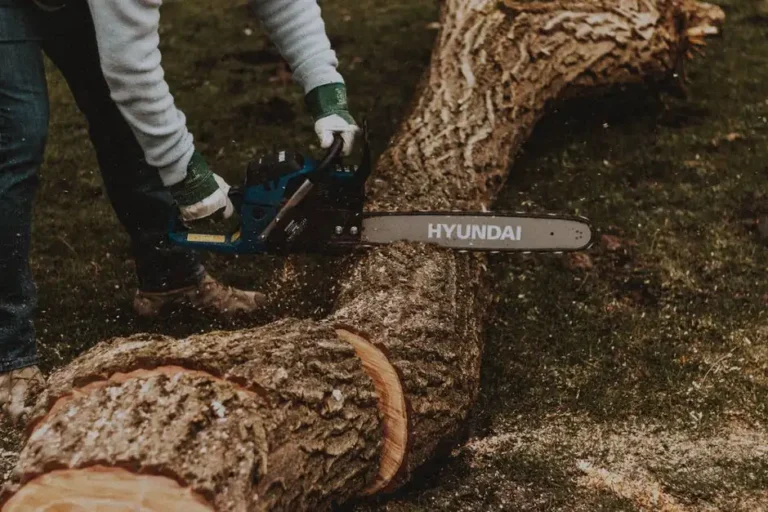
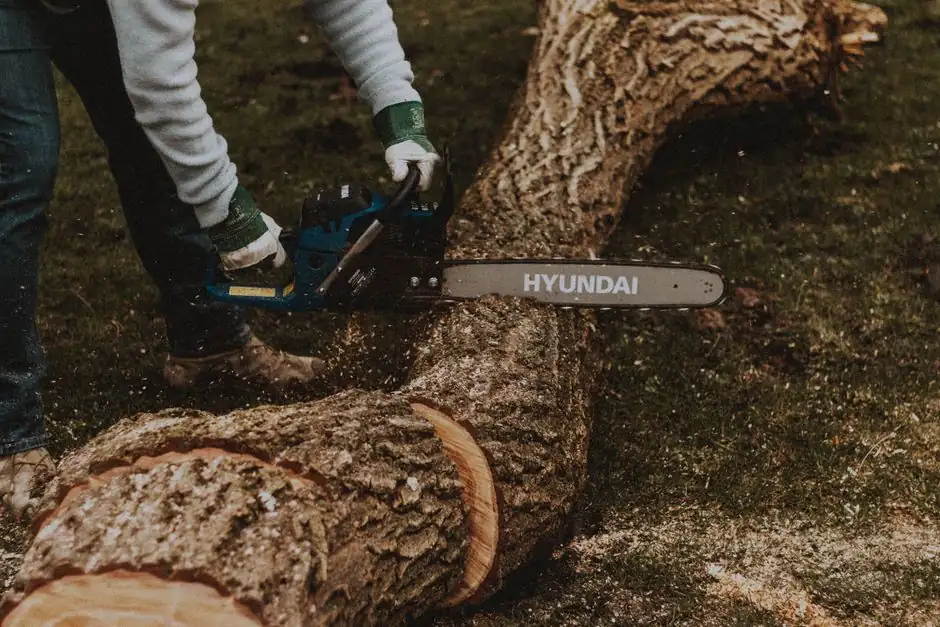
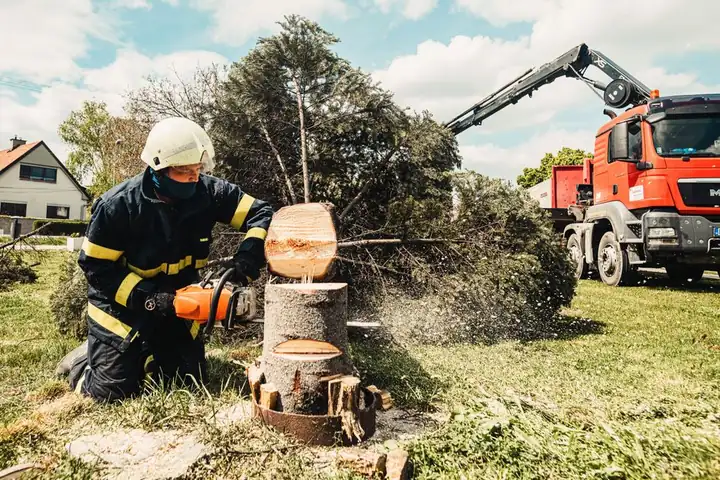
With the canopy gone, the trunk comes down in sections sized to the space below. Each round is cut, lowered or dropped into the zone, and cleared before the next is taken. Where the trunk leans toward a house or has significant decay, the crew may adjust the order, taking weight off the risky side first. The final cut leaves a stump at whatever height was agreed — often low, sometimes slightly higher when the stump will be ground next, since grinding equipment works best on a clean, low stump.
Removal of the trunk and removal of the stump are two different jobs, and confusion between them is the most common misunderstanding homeowners have. If your plan includes it, stump grinding follows: a grinder chews the stump and the surface roots below ground level, leaving a mound of mulch-like grindings. If it is not included, the stump stays, cut as low as practical. Neither is a wrong choice, but it should be a choice you made on purpose, in writing, before the crew arrives — not a surprise you discover after they leave.
Cleanup is the final step and the one you will judge the job by. Typically the crew rakes and blows the work area, hauls chipped brush, and removes logs — or, if you asked to keep firewood, cuts rounds to length and stacks them where you directed. What is included varies by company, so pin it down before work begins. Homeowners comparing paperwork on this point will find our walk-through of what affects the cost of tree removal useful, since these scope choices are exactly where estimates diverge.
You do not need to watch the work, and most homeowners are happier inside or away, because the work zone must stay clear anyway. Being reachable by phone helps if the crew discovers hidden decay or a hornet nest and needs a quick decision from you. Many people simply confirm the plan at the start, leave the crew to it, and walk the finished yard with them at the end.
That depends on what you arranged before the job. Brush is usually chipped on site and hauled away, and logs are either removed by the crew or cut into firewood rounds and stacked for you. Keeping the wood can be a good outcome if you heat with it, but it should be agreed in advance, since it changes how the crew stages and finishes the work.
Yes, and winter removal is common, because frozen ground supports equipment with less lawn damage and the absence of leaves makes the tree’s structure easy to read and lighter to handle. Crews work year-round in Indiana, adjusting for ice and severe cold. A dead or hazardous tree should not wait for a favorite season anyway; the safest time to remove it is before it fails, whatever the month.
Tell the crew about the lines when you call, because work within reach of energized lines follows stricter rules and sometimes involves the utility trimming or de-energizing its portion first. Never attempt any cutting near lines yourself, and keep everyone well back from a tree in contact with a line, since the ground around it can be energized. The assessment will sort out which parts belong to the utility and which belong to the tree crew.
Once you understand the steps, the next move is a site visit so the plan can be built around your actual tree and yard. We will walk the property with you, explain the approach piece by piece, and put the scope in writing before any cutting starts. Call (844) 542-2293 to request an assessment and tell us about the tree you need taken down.