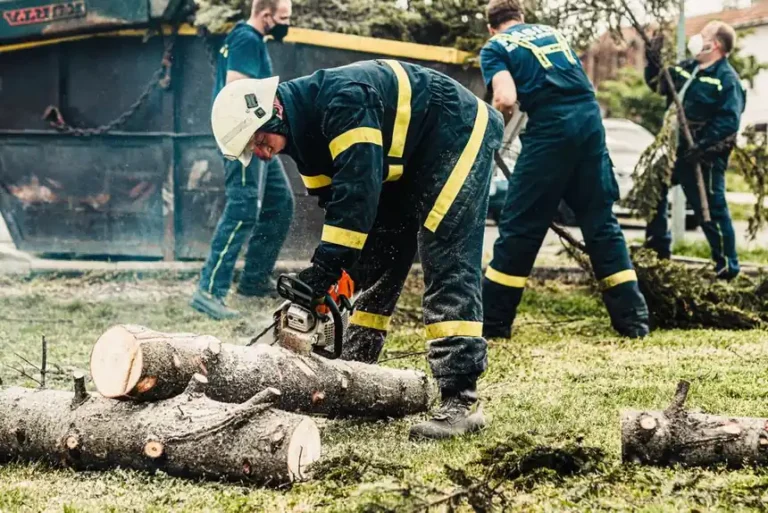


Good winter tree care in Evansville comes down to four habits: refresh mulch rings before hard freezes, water young and stressed trees when the ground is dry going into a freeze, keep road salt and snow piles away from trunks and root zones, and use the dormant season, when structure is visible and trees are at rest, for the pruning and inspection work that summer hides under leaves.
Winter in the Ohio River valley swings between thaw and hard freeze, with ice storms as the season’s real threat. Trees handle cold well when they enter it healthy and hydrated. Most winter damage traces back to dry roots, salt, ice load on weak branches, or neglect that started in the fall.
A proper mulch ring insulates the root zone against the freeze-thaw cycling that heaves soil and stresses fine roots. It also holds moisture in the ground through dry, windy cold spells and keeps the soil temperature steadier than bare ground or turf. Roots are the least cold-hardy part of a tree, and mulch is the simplest protection they get.
Spread organic mulch two to four inches deep in a wide, flat ring, extending toward the drip line as the tree grows. Keep it several inches away from the trunk itself. The bark needs air; mulch piled against the trunk in a cone holds moisture against the bark all winter and invites decay and rodents.
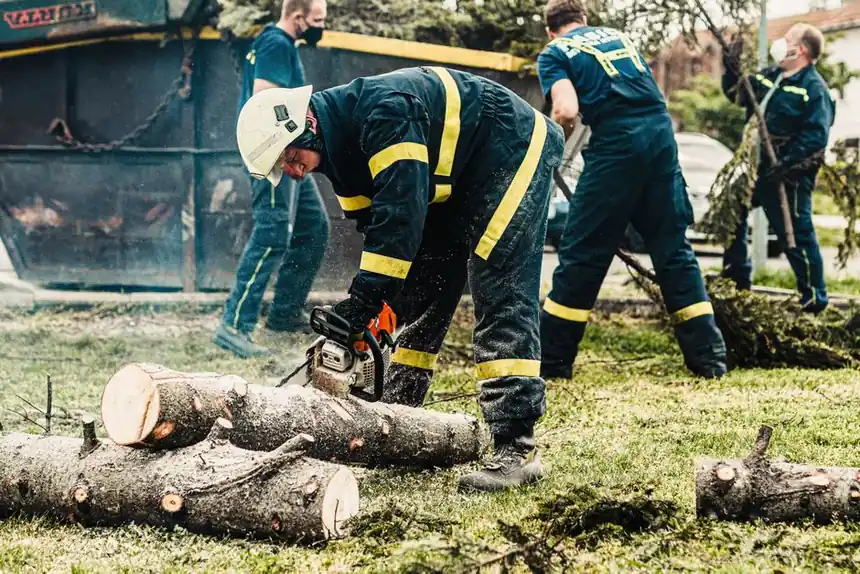
Cold winter wind pulls moisture from branches and evergreen foliage, while frozen or dry soil prevents roots from replacing it. The result is winter desiccation: scorched evergreen needles, dead branch tips, and trees that leaf out weakly in spring. A deep watering before the ground freezes, during a dry fall or early winter, is genuine protection, not fussiness.
Prioritize trees planted in the last two or three years, evergreens, and any tree that already showed stress in summer: early leaf drop, scorched edges, or a thinning crown. Water slowly at the root zone on a day above freezing, early enough for the water to soak in before nightfall.
De-icing salt reaches trees two ways: spray thrown up from roads onto branches and buds, and meltwater carrying salt into the root zone, where it interferes with water uptake even in moist soil. Symptoms arrive in spring as one-sided crown dieback on the road side, stunted leaf growth, and scorched leaf margins, which is why salt injury is so often misread as disease.
Where you control the salt, use it sparingly near trees and consider sand or a lower-impact de-icer on driveways and walks close to planting beds. Never pile salted snow against trunks or over root zones; pile it where meltwater drains away from your trees.
With leaves gone, a tree’s architecture is fully visible: crossing branches, weak unions, deadwood, and cracks stand out. Pruning in dormancy also means wounds begin closing as spring growth starts, and the disease and insect activity that complicate some summer cuts are at rest. This is why the structural side of tree pruning is winter work in Indiana.
Walk the property after the leaves drop and list what you see: deadwood over the roof, split unions, branches reaching toward lines. Compare the canopy against last winter’s photographs if you keep them. Our ice storm damage guide for Evansville trees explains which of those findings become urgent when ice loads every weak point at once.
The worst response to an ice-loaded tree is to shake branches or strike them to knock the ice loose; frozen wood is brittle, and branches break at points they would have survived if left alone. Most healthy trees bend under ice and recover as it melts. Keep people, vehicles, and pets out from under loaded limbs until the thaw has passed.
Once the ice is gone, inspect for cracked unions, split trunks, and hung-up branches still caught in the canopy. Those hangers are the real post-storm hazard and belong to professionals. This seasonal rhythm, prepare, endure, inspect, is the same one laid out in our tree care calendar for Indiana homeowners, which places winter work in the full year.
Only when the ground is unfrozen and dry, which in Evansville usually means late fall and early winter rather than the coldest weeks. If several weeks pass without rain or snow and daytime temperatures rise above freezing, a slow, deep watering helps young and stressed trees most. Once the soil is frozen, water cannot reach the roots, and further watering does nothing. Timing, before the freeze and during dry spells, is what makes winter watering useful.
Small, reachable branches are reasonable homeowner work with clean, sharp tools and correct cuts just outside the branch collar. Anything requiring a ladder, a chainsaw overhead, or cuts near lines is professional work regardless of season; winter adds brittle wood and slippery footing to those risks. Many homeowners handle the inspection themselves and hand the list to a crew, which keeps the judgment yours and the dangerous part theirs.
Usually it is desiccation, often called winter burn. Wind and winter sun pull moisture from needles while cold or dry soil prevents roots from replacing it, so the foliage effectively dries out, worst on the windward side. Anti-desiccant sprays are sometimes offered, but deep watering before freezes and a healthy mulch ring address the cause more reliably. New growth in spring often replaces the damage if the buds survived.
No. Mulch applied in early winter still insulates the root zone for the coldest months and the freeze-thaw swings of late winter, which is when heaving does much of its damage. Apply it on a milder day when the ground is workable, keep it off the trunk, and check it again in spring. The only bad time to fix a missing or volcano-shaped mulch ring is never; the trees benefit from the correction in any season.
A few calm hours of mulching, watering, and looking up will carry your trees through Evansville’s freezes and ice in far better shape. If your dormant-season walk-through finds deadwood, splits, or a tree you do not trust under ice, call (844) 542-2293 to arrange inspection and pruning while the dormant window is open.